
AI for Dentists: 2026 Costs, Tools, ROI and HIPAA Guide
State of AI for dentists in 2026
AI for dentists has crossed a real line. In 2024 roughly one in three US dental practices reported using at least one AI tool, up sharply from a small single-digit share two years earlier, and the number keeps climbing into 2026. That shift is not a trade-show novelty anymore. It sits inside the operatory, on the radiograph screen, and in the back office where recall and claims get worked.
The market data tells the same story. Independent research firms peg the AI in dentistry market at roughly $460 million to $516 million as of 2024 to 2025, growing at a compound annual rate near 20 to 22 percent through the early 2030s. Money is moving because the tools now clear regulatory review and produce measurable results at the chair.
Here is the tension that decides the next 24 months. Testing a tool is easy. Embedding it in a workflow that changes case acceptance, chair utilization, and documentation time is hard. The gap between practices that experiment and practices that operationalize is where competitive advantage is opening. Ready to move faster than your local market? You can book an AI strategy consultation to pressure-test your plan before you spend a dollar on licenses.
When people say AI for dentists they usually blur very different tools that serve very different needs. A solo general practitioner with one chair has little in common with a 30-location DSO running implants, ortho, and pediatric programs across several states. This guide is for practice owners, dental group operators, clinical directors, and consultants who need concrete decisions in the next few weeks: what to adopt, what to avoid, what it actually costs, what changes in daily practice life.
Two things are true at once. First, AI is entering dental practices with or without a plan. Hygienists already draft follow-up emails with ChatGPT. Associates upload X-rays to consumer chatbots to second-guess a diagnosis. Front desk staff test scheduling tools without IT approval. Ignore that reality and you lose control of the clinical and operational process while exposing the practice to HIPAA, malpractice, and reputational risk.
Second, the real transformation is organizational and economic, not technological. AI rewires how a practice generates value, prices its services, and competes locally. The distance between top-quartile AI-augmented practices and average ones is widening, and it will not close on its own.
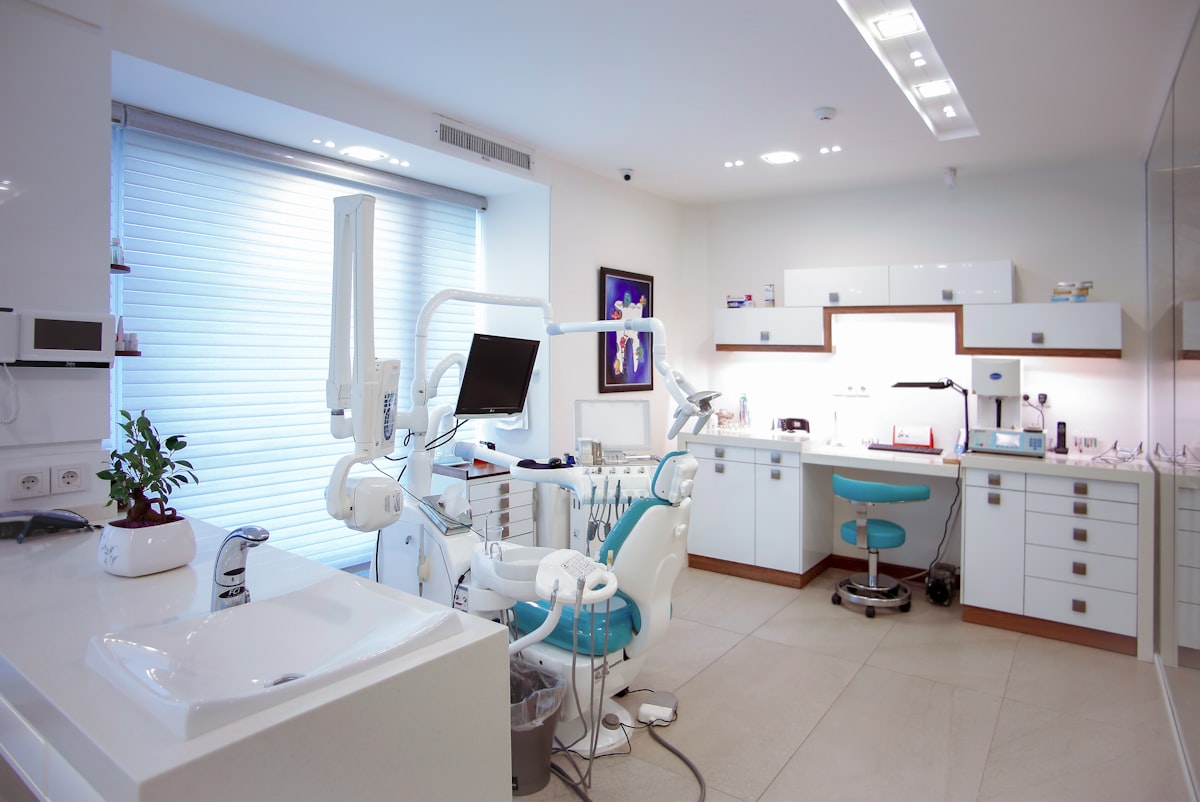
The six families of AI tools relevant to dental practices
Before adoption, clear up the map. AI for dentists covers six families of tools that differ in impact, cost, and risk.
General purpose generative assistants. ChatGPT, Claude, Gemini, Copilot, Le Chat. For most dentists these are the first AI contact point. Govern them, do not ban them. The question is not whether staff will use them but with what privacy guardrails and what critical thinking. A practice that ignores them lets them become an uncontrolled shortcut, with real risk that protected health information lands on external servers under no documented policy.
AI-powered diagnostic imaging tools. Pearl, Overjet, VideaHealth, Denti.AI, Second Opinion AI. These read intraoral and panoramic radiographs and flag caries, calculus, bone loss, periapical lesions, and other pathologies. FDA-cleared platforms now match experienced clinicians on many indications. This is arguably the highest-impact clinical category today, both for accuracy and for case acceptance conversations with patients.
Practice management systems with embedded AI. Dentrix Ascend, Eaglesoft, Open Dental, Curve Dental, Carestream, Planet DDS, and a growing list of cloud-native players are adding AI for scheduling, no-show prediction, treatment plan presentation, and revenue cycle. For most practices this is the most natural entry point because the integration with patient records already exists.
Workflow automation and back-office tools. Make, Zapier, n8n, Power Automate, Bardeen. These low-code platforms let owners build mini-workflows that connect intake forms, practice management, insurance portals, lab communications, and patient texting. Front desk staff stop copying data between systems and reclaim hours of low-value time each week.
Patient communication and engagement AI. Weave, Doctible, Solutionreach, NexHealth, Adit, Dental Intelligence. These triage patient messages, recommend recall timing, score retention risk, and personalize campaigns. Their ROI cycle is shorter than clinical AI because they touch revenue directly through recall, recare, and reactivation.
Marketing and content AI for dental practices. Jasper, Copy.ai, Hootsuite Insights, ChatGPT for local SEO, AI image generators for social. Often dismissed as cosmetic, these tools move patient acquisition cost in competitive metros where dental search ads can exceed $25 per click.
For a wider view of how regulated professional services adopt AI, the AI for professional services guide offers frameworks that carry over from the strict dental clinical context. Practice owners in medicine and allied health will also find the AI for healthcare executive playbook 2026 useful for governance patterns that translate directly to dentistry.
AI dental use cases ranked by ROI and effort
Not every use case deserves equal attention in year one. This table maps the main options by likely return and by implementation effort, so you can sequence your first two or three moves instead of scattering budget across a dozen pilots.
| Use case | Typical ROI horizon | Implementation effort | Regulatory sensitivity | Priority for year one |
|---|---|---|---|---|
| AI imaging overlay (caries, bone loss) | 3 to 9 months | Medium | High (FDA cleared device) | High |
| AI-driven recall and reactivation | 2 to 6 months | Low | Low | High |
| No-show prediction and schedule fill | 3 to 6 months | Low to medium | Low | High |
| Ambient documentation and scribing | 1 to 4 months | Low to medium | Medium (PHI) | High |
| Claim denial prediction and RCM | 4 to 9 months | Medium | Medium | Medium |
| Treatment plan visualization | 3 to 9 months | Medium | Medium (truthful claims) | Medium |
| Patient triage chatbot | 6 to 12 months | Medium to high | Medium (PHI) | Low to medium |
| Marketing content and local SEO | 4 to 12 months | Low | Low (advertising standards) | Low to medium |
Read the table as a sequencing tool, not a scoreboard. The high-priority rows share three traits: fast payback, contained effort, and a clear owner inside the practice. Start there. Save the longer horizon plays for months four through twelve, once the team trusts the process.
Why the average dental practice is behind on AI
The dental delay is not random. It has five structural causes, each with a different countermove.
First, practice size and ownership. A large majority of US dental practices are still single-location, owner-operator businesses. Small average size limits investment capacity, structured training, and vendor negotiation leverage. Any AI plan that ignores this starts handicapped. The answer is aggregation: dental service organizations, study clubs, and shared infrastructure at least at the regional level.
Second, the fee-for-service revenue model. When revenue is anchored to procedures billed per chair-hour, internal efficiency does not automatically raise revenue. Without a parallel shift in case acceptance, recall rates, and service mix, AI investment can underperform. The move toward outcome-based fees, hybrid memberships, dental savings plans, and bundled care is the strategic prerequisite many practices skip.
Third, clinical culture. Dentistry rests on tactile expertise, hand skills, and direct clinician-patient trust. Generative AI often reads as a threat to clinical identity rather than a leverage tool. Cultural resistance is the first barrier, before the technological one. Continuing education is catching up slowly, but most CE programs still treat AI as a niche topic rather than a core competency.
Fourth, regulatory uncertainty. The FDA has cleared dozens of AI imaging tools as Class II medical devices, yet liability frameworks for AI-assisted diagnosis remain thin. The HIPAA Privacy Rule, state dental practice acts, and malpractice policy language are all in motion. Without a clear framework, many dentists wait and see.
Fifth, technology fragmentation. More than fifteen practice management platforms hold meaningful US market share, each with its own AI roadmap and integration tempo. What works on Dentrix may not work on Eaglesoft. What integrates with one sensor brand may fail on another. That fragmentation slows adoption across the industry.
Cost of delay. Industry estimates suggest that practices which do not systematically adopt AI over the next 24 months risk a 20 to 30 percent efficiency gap versus AI-augmented peers. The mechanism is simple. An AI-augmented practice serves more patients per chair-hour, presents treatment plans with higher acceptance, recalls lapsed patients with precision, and frees clinical staff for higher-value work. A practice that stays still keeps selling procedures while the market learns to pay for outcomes, retention, and experience.
Eight processes inside a dental practice where AI makes a real difference
Not every process reacts the same way to AI. Eight stand out as material and immediate. The first year of any AI program should concentrate here.
1. Diagnostic imaging interpretation. AI overlays on bitewings, periapicals, panoramics, and CBCTs that highlight caries, calculus, bone loss, periapical lesions, and anatomical landmarks. In FDA trial data, dentists using AI assistance detected substantially more caries-bearing tooth surfaces and missed fewer lesions. Case acceptance rises because patients see the finding on screen instead of only hearing it described.
2. Treatment plan presentation. AI-generated visualizations, before-and-after rendering, side-by-side option comparisons, evidence-backed narratives. This can cut case presentation time per patient by 30 to 50 percent while lifting acceptance in published case studies. It is especially powerful for high-fee cases like implants, full-arch rehabilitation, and clear aligners.
3. Scheduling optimization and no-show prediction. AI models that flag appointments at risk of cancellation, recommend overbook policies, optimize provider utilization, and surface gaps to fill with same-day production. Prediction accuracy in the 70 to 80 percent range is now common, and practices adopting these tools can cut no-show rates meaningfully and lift chair utilization.
4. Recall and reactivation. AI that scores every patient on recall risk and recommends the timing, channel, and message for each. This moves recall from a generic mass campaign to a personalized retention engine. AI-powered recall commonly reaches reactivation rates of 35 to 48 percent on lapsed patients, against roughly 8 to 12 percent for manual calls and postcards.
5. Revenue cycle and insurance. AI that predicts claim denials before submission, recommends fixes, automates pre-authorization documentation, accelerates collections, and flags outlier write-offs. It reduces days in accounts receivable and recovers revenue previously lost to administrative friction.
6. Patient communication and triage. Conversational AI on the website answering common questions on fees, scheduling, insurance, and emergency triage, plus AI summarization of patient texts and automated confirmations. This frees front desk staff for higher-value relationship work.
7. Documentation and chart notes. Ambient scribing that converts clinician dictation or background conversation into structured chart notes, periodontal charting assistance, and coding suggestions. This saves 30 to 60 minutes per clinician per day, often the most valuable hour in an owner's week.
8. Marketing and patient acquisition. AI-driven local SEO, image generation for social, targeted advertising for new patients, and optimized review response. It lowers cost per acquired patient in competitive markets and improves brand consistency across channels.
For a parallel look at how other clinical small businesses prioritize, the AI for veterinary clinics guide and the AI for chiropractors guide apply similar logic to adjacent practice types.
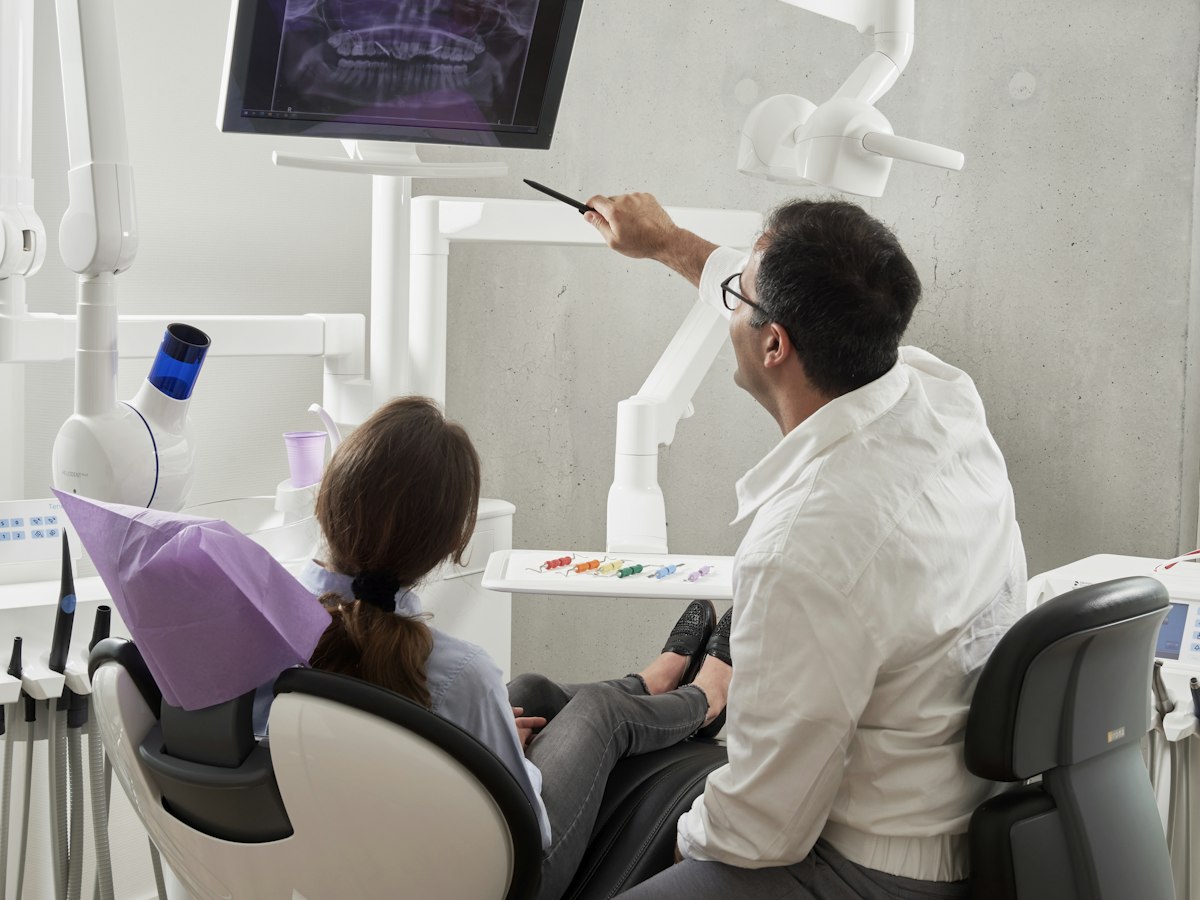
Real costs of AI for dentists: 2025 to 2026 ranges
Let us talk about costs without euphemisms. These are realistic ranges visible in US dental projects today, by practice type.
Solo practice with one to three operatories. First-year investment between $4,000 and $12,000. Includes enterprise licenses of one AI assistant for the owner-doctor, one AI imaging overlay subscription, structured staff training of 10 to 15 hours, and a one-page AI policy. Frequent mistake: subscribing to four free trials in parallel and integrating none. The result is broad experimentation with zero measurable impact on revenue or case acceptance.
Group practice with two to four locations. Range $15,000 to $45,000 in the first year. Includes a shared AI platform, licenses on the two or three core tools, a structured training program, SOP definition, and a HIPAA review specific to the AI flows. This band is where ROI becomes most visible because the investment scales across operatories and locations.
Structured DSO with five to twenty locations. Range $50,000 to $200,000 in the first year. Includes an enterprise platform integrated with the practice management system, licenses across clinical and operational staff, a continuous training program, one or two AI champion roles, an external advisor, a HIPAA and FDA compliance audit, and redesign of core processes. In DSOs the real cost is executive time on operating model redesign.
National DSO or dental network beyond twenty locations. Range $200,000 to $1,000,000 in the first year. Includes a common platform, a shared training program, and a cross-functional working group across clinical, finance, IT, compliance, and marketing leadership. This is where structural transformation begins, with systematic governance.
Cost line items practices underestimate. AI licenses run 25 to 35 percent of total. Structured training runs 25 to 30 percent of the annual budget and is almost always underestimated. Process redesign, meaning SOP revision, intake form changes, and chart note templates, runs 15 to 20 percent. External consulting in the first six months runs 15 to 20 percent. Accessory costs such as devices, custom integrations, cybersecurity, and the HIPAA audit run 10 to 15 percent.
Expected ROI. A practice that adopts AI with discipline reclaims 20 to 35 percent of staff time on routine work such as recall outreach, claim follow-up, intake processing, and chart documentation. It cuts case presentation time by 30 to 50 percent and grows capacity to serve more patients without adding chairs or hires. Operating margin typically lifts 5 to 15 percent after the first 18 months, once the pricing model updates to reflect added value rather than procedure mix alone. For a broader treatment of automation returns, see the AI automation for business guide.
If you are a practice owner or clinical director and you sense your team has debated AI too long without deciding, it is worth opening an operational conversation with someone who works on these implementations every week, inside practices and inside vendor relationships. A focused working session can keep the first year from dissolving into disconnected experiments.
HIPAA, FDA, and ADA guidance: the regulatory frame for AI in dentistry
No serious conversation about AI for dentists skips the regulatory frame. It is layered, evolving, and consequential. Ignore it and you expose the practice and the individual clinician to liability that is hard to insure away.
The FDA regulates AI-based diagnostic tools under the Software as a Medical Device framework. Leading dental imaging tools such as Overjet, Pearl, and VideaHealth hold 510(k) clearance as Class II medical devices for specific indications, and new clearances for panoramic pathologies continue to arrive. Practices using these tools should verify that the cleared indication matches their actual workflow, that the clinical decision support framing holds, and that the dentist keeps final diagnostic responsibility. Off-label use of AI imaging tools is a malpractice exposure many practices underestimate. The FDA maintains an official page on Artificial Intelligence in Software as a Medical Device that is the foundational reference here.
HIPAA Privacy and Security Rules apply across the board. The hot points in dental practices are five: protected health information processed on cloud AI systems with servers often outside the US, Business Associate Agreements with every AI vendor that touches PHI, breach notification protocols for an AI-related incident, minimum-necessary access controls inside the platform, and patient consent language for AI-assisted diagnostics and communications. Most practices updated their Notice of Privacy Practices in the last 18 months, but enforcement gaps remain common.
ADA and state dental board guidance. The American Dental Association has published a growing body of standards, including White Paper No. 1106 and the ANSI/ADA Standard No. 1110-1:2025, the first US standard on AI in dentistry. The consistent message is that AI is a clinical decision support tool, not a substitute for clinical judgment. State dental boards keep authority over scope of practice and supervision. A clinician who signs off on an AI-generated diagnosis without meaningful human review risks disciplinary action. Documenting clinical reasoning that integrates AI outputs is the safer pattern.
Malpractice and liability. When a diagnostic error traces to over-reliance on an AI suggestion, liability sits primarily on the licensed dentist, not the software vendor. Malpractice carriers are updating policy language for AI-related claims, so owners should actively verify coverage. Notify the broker when introducing AI imaging or documentation tools and get written confirmation of coverage scope.
Marketing and consumer protection. AI-generated treatment plan visualizations and AI-personalized marketing must stay truthful and must not promise outcomes. The FTC has been clear that AI-driven personalization does not exempt advertisers from truth-in-advertising standards. Dental boards are watching before-and-after content closely, especially AI-enhanced visuals.
Typical mistake: treating compliance as a final check. Build it into tool selection from day one, with a named compliance owner and a small dedicated budget. For governance patterns that carry across regulated categories, the AI change management framework is a useful companion.
A 30, 60, 90-day AI adoption plan for a dental practice
An honest onboarding plan beats a conference deck. This structured framework gives the owner and office manager a week-by-week path for the first quarter, calibrated to a US practice or small group.
Days 1 to 30: foundation
- Run a starting-point audit: infrastructure state, staff AI literacy, any existing experimentation, current practice management system, available AI add-ons.
- Form a small working group: owner-doctor, clinical director, office manager, a tech-friendly senior staffer, and an external advisor if needed.
- Draft a written AI usage policy covering PHI handling, prohibited tools, and the minimum review steps before any clinical use of AI output. Have every staff member sign it.
- Deliver foundational training, 8 to 12 hours, on what generative AI is and is not, how to use it methodically, and what the HIPAA and FDA constraints are.
Days 31 to 60: first quick wins
- Select two quick-win use cases. One clinical, for example an AI imaging overlay on bitewings and periapicals. One operational, for example AI-driven recall and reactivation.
- Stand up Business Associate Agreements with each AI vendor that touches PHI before any patient data flows.
- Assign a named owner to each use case and define the single metric that proves it works, such as reactivation rate or documentation time per clinical hour.
- Run a two-week supervised pilot with a subset of the team before wider rollout.
Days 61 to 90: measure and decide
- Review the two pilots against their metrics. Keep what works, retire what does not, and document why.
- Extend the working tool to the full team with refreshed training and updated SOPs.
- Schedule the quarterly cadence: monthly metric review, quarterly tool review, annual training refresh of at least 20 hours per person.
- Open the internal conversation on pricing model shifts, from pure fee-for-service toward hybrid memberships and bundled care.
What not to do in the first 90 days: buy six subscriptions at once, send only the owner to a single conference without the team, hire a generalist tech vendor with no operational plan, or launch without the staff who will actually use the tools.
AI maturity self-assessment scorecard for a dental practice
Use this scorecard in early conversations with owners. Score one point per yes, zero per no. Under 7, the practice is in phase 1. Between 7 and 9, phase 2. Above 9, ready for structural transformation.
| # | Assessment question | Score (1 = yes, 0 = no) |
|---|---|---|
| 1 | Is there a recognized AI lead with dedicated time and budget? | |
| 2 | Is there an up-to-date inventory of AI platforms in use, with licenses, costs, and owners? | |
| 3 | Is there a written AI usage policy signed by all staff? | |
| 4 | Have HIPAA and FDA compliance documents been updated for the new AI flows? | |
| 5 | Has at least 70 percent of the team completed foundational AI training in the last 12 months? | |
| 6 | Are at least three AI use cases in measurable production? | |
| 7 | Have practice SOPs been revised to integrate AI? | |
| 8 | Has the practice activated specific AI tools for diagnostic imaging and patient communication? | |
| 9 | Is there a dedicated annual AI budget, separate from general IT? | |
| 10 | Have key patients been informed transparently about how the practice uses AI? | |
| 11 | Is there a formal mechanism to retire AI tools that underperform after a defined trial? | |
| 12 | Is there an external advisor or partner working continuously with the practice? | |
| | Total | |
Honest reality: most US dental practices in mid-2026 sit between 2 and 5 yeses. That is not a failure, it is the realistic starting point. From there you build, with a plan rather than slogans.
Three real case studies (anonymized) of AI inside dental practices
To make this concrete, here are three real profiles of US dental practices I have followed or studied closely. Anonymized, but the numbers are accurate.
Case 1: solo general practice with five staff in the Southeast US
Starting point: medium-sized solo practice with 1,800 active patients, fee-for-service with limited insurance participation, Eaglesoft for eight years, decent digital literacy but no structured AI use.
What they did in 12 months:
- Invested $18,000 total across licenses, training, and external consulting.
- Formed a mini working group with the owner-doctor, the office manager, and two senior staff.
- Put three workflows into production: AI imaging overlay on bitewings and periapicals, AI-driven recall and reactivation, AI-assisted treatment plan presentation for cosmetic and implant cases.
- Reduced average chart note documentation time per clinical hour by 40 percent.
- Reclaimed nine hours of clinical chair time per week through better scheduling and recall.
- Increased same-arch acceptance rate on implant cases by 22 percent in the second half of the year.
What did not work: the first AI website chatbot was paused after three months because it created more friction than value for prospective patients. It relaunched six months later with a simpler design based on tiered FAQs and live escalation to the front desk. Lesson: start with internal use cases, then open outward.
Case 2: regional dental group with 9 locations in the Northeast US
Starting point: established regional group with mixed insurance and fee-for-service, revenue above $14 million, strong cosmetic and implant programs across most locations.
What they did in 14 months:
- Invested $145,000 in an integrated AI platform and structured training across all locations.
- Appointed an AI champion at the corporate level with one day per week dedicated.
- Engaged an external partner for the first six months to accelerate the learning curve.
- Implemented five workflows: AI imaging across all chairs, ambient documentation for associates, no-show prediction, claim denial prediction, and AI-personalized recall.
- Reduced no-show rate from 9.2 percent to 5.8 percent in 12 months.
- Increased per-chair production by 14 percent year over year, faster than the group's prior five-year average.
- Acquired two additional locations using the AI infrastructure as a competitive differentiator in negotiations.
Lesson: in structured group practices, AI is mostly a positioning and operating model lever, not just an efficiency lever. The premium the group can charge for clinical excellence rises in parallel.
Case 3: rural and small-town network of 7 practices in the Midwest US
Starting point: informal network of seven small practices that already shared continuing education events but had no shared infrastructure for AI or operations.
What they did in 18 months:
- Invested $95,000 total, shared pro rata across the seven practices.
- Signed a formal network agreement with specific patient data protection clauses.
- Built a shared training hub with one dedicated educator and eight sessions per year.
- Defined a shared AI policy valid across all seven practices.
- Built a library of templates and validated prompts, now with more than 320 shared resources.
- Launched a staff exchange program with peer learning across practices.
- Negotiated vendor discounts of 25 percent on AI software through aggregated buying power.
Lesson: for small and rural practices, network-level aggregation is the right level for AI investment. It enables economies of scale and training quality otherwise out of reach. The model is replicable in many local geographies.
Mistakes to avoid in the first year of AI for dentists
Real-world experience shows mistakes repeat with dull consistency. Here are the most expensive ones.
Mistake 1: starting from technology, not from need. Buying licenses before you know which processes must change is buying tools without a plan. The correct pattern is the opposite: map the process, find the bottleneck, then select the tool.
Mistake 2: too many tools in parallel. Five AI tools tested at once means five tools abandoned within six months. Two well-integrated tools beat five in perpetual evaluation. Concentration is a virtue here, and scattered exploration is a hidden cost.
Mistake 3: ignoring the staff. AI decisions imposed from the owner's chair meet resistance, especially in long-tenured teams. Decisions built with the staff who will use the tools tend to stick. Engagement is strategy, not politeness.
Mistake 4: separating AI from the business model. AI is not an IT initiative. It touches positioning, pricing, service mix, and patient experience. It belongs in the practice's strategic plan, not a corner of the IT plan. Without that link, AI stays a cost without return.
Mistake 5: underestimating training. Without structured continuous training, AI becomes the isolated experiment of a single enthusiast. Training is worth at least 25 to 30 percent of the year-one budget and must reach all roles, not just the owner.
Mistake 6: ignoring patients. Informed patients become allies. Kept-in-the-dark patients become opponents at the first problem. Structured, transparent communication about how the practice uses AI is a trust investment that compounds.
Mistake 7: premature vendor lock-in. Signing a multi-year contract before completing two independent trial cycles costs you flexibility and negotiation leverage. The first 12 months are exploration, not final commitment.
Mistake 8: expecting ROI in 3 months. AI done well in a dental practice pays back in 12 to 24 months. Anyone promising faster is selling smoke. The adoption curve has a physiology you have to respect.
Mistake 9: ignoring clinical responsibility. The dentist remains the holder of clinical responsibility. No AI system replaces that. Every signature on AI-derived documentation without meaningful human review is a ticking liability. Redesign the workflow to enforce human review on critical steps.
Mistake 10: communicating badly outside. A practice that claims to use AI but cannot demonstrate anything gets dismantled in five minutes by an informed patient or referral partner. Communicate only what is in production and measured, never promises or intentions.
Comparison of AI tools available for dental practices today
A quick map of the main tools every US practice is evaluating or should evaluate in 2026.
ChatGPT Team and Enterprise, Claude for Work, Gemini Workspace. General purpose LLMs with packages built for professional offices, stronger privacy guarantees, and integration with office tools. Pros: horizontal, useful across many tasks. Cons: without training and practice knowledge the value stays limited. For chart note polishing, patient letters, marketing copy, and treatment narratives they are solid starting points.
Dental imaging AI. Pearl Practice Intelligence, Overjet, VideaHealth, Denti.AI, Second Opinion AI. Specialized AI for bitewings, periapicals, panoramic, and CBCT. Pros: FDA cleared, clinically validated, immediate diagnostic value. Cons: monthly per-chair fees can be material, and integration with the imaging stack must be verified upfront.
Practice management with embedded AI. Dentrix Ascend, Eaglesoft, Open Dental, Curve Dental, Carestream, Planet DDS. The major platforms are adding AI modules for scheduling, claims, and recall. For most practices this is the most natural entry point because it removes integration friction.
Patient communication and engagement AI. Weave, Doctible, Solutionreach, NexHealth, Adit, Dental Intelligence. AI-driven recall, reactivation, intake, review requests, and two-way texting. Immediate ROI on retention and front desk efficiency.
Ambient documentation and AI scribing. Dental AI scribes from several emerging vendors, plus Suki and Augmedix-adapted workflows. They convert clinical conversation into structured chart notes and save 30 to 60 minutes per clinician per day, the most valuable time recovery in any practice.
Marketing AI. Jasper, Copy.ai, ChatGPT for local SEO, AI image generation, and targeted ads via Google and Meta. Important for practices that want to grow new patient acquisition beyond word of mouth in competitive markets.
Low-code automation. Make, Zapier, n8n, Power Automate. These let practices build custom mini-workflows without depending on the practice management vendor. Pros: total flexibility. Cons: you need one person with minimum technical comfort on the team.
For vendor selection criteria that generalize across regulated environments, see the AI workflow automation for business guide, which applies the same principles beyond dentistry.
Privacy, HIPAA, and patient data: the absolute priority
Patient data inside a dental practice is among the most sensitive categories of personal information. Mishandling it is not just a reputational risk. It is a civil and administrative liability that sits directly on the owner.
Legal basis for processing. Patient consent is not always the right basis for AI processing of PHI, because the dentist-patient relationship has an inherent asymmetry that can make consent contestable. Sturdier bases include treatment, payment, and healthcare operations under HIPAA, with a documented review of the AI flow.
Minimization. An AI platform with access to all records across the practice, with no role-based controls, is not compliant. Define access by role, by patient, by purpose. Genetic predisposition data, behavioral health markers, and certain demographic categories need enhanced protection.
Right to deletion and portability. The practice must be able to delete patient data when legally required or when a patient requests it, even when AI platforms are third-party hosted. This is technically hard and must be addressed during vendor selection, not retroactively. Portability matters when patients switch practices.
Cross-border data transfers. Every non-US AI vendor processing US patient data should sit under appropriate safeguards. For patients with EU residency, GDPR Article 9 considerations on health data apply. The Office for Civil Rights at HHS is the enforcement body for HIPAA concerns.
Data breach. The practice needs a formal breach response procedure with HIPAA-compliant notification timing. AI systems widen the attack surface and demand a stronger cyber posture. Notification timelines under the HIPAA Breach Notification Rule are unforgiving.
Cybersecurity. Models exposed to prompt injection, archives holding decades of PHI, and ransomware that targets dental practices specifically. Treat the practice system as a critical production system. Annual penetration testing with a specialized partner is no longer optional for any practice using cloud AI systematically.
The operational message is plain: there are no brilliant AI practices without equally brilliant data governance. Practices that build the second pillar harvest the fruits of the first. The rest stay stuck or pay for their first incident at a very high price.
The impact of AI on the role of the dentist
AI will not replace the dentist. It will transform the role. Three vectors of change.
More time for high-value clinical work. If AI cuts a third of the time spent on documentation, claim follow-up, recall outreach, and routine radiograph reading, the dentist recovers time for what machines cannot do: complex judgment, multidisciplinary case planning, chairside relationships, and leadership of the clinical team.
Pricing model evolution. Pure fee-for-service fits poorly in a world where AI compresses the time routine procedures take. Leading practices are moving to hybrid models with memberships, dental savings plans, bundled comprehensive care, subscription preventive care, and outcome-based premium services. The real shift is cognitive, not technological.
New required skills. Writing effective prompts, critically evaluating AI outputs, methodically reviewing AI-generated documentation, and teaching the team disciplined AI use. These skills must be built, not assumed. The clinical competencies of the 2030 dentist will look materially different from those of the 2020 dentist.
Risk of the disconnected clinician. The dentist who refuses AI on principle risks becoming steadily less relevant, over the next five years, for sophisticated patients and strategic referral partners. That is not a judgment, it is an operational forecast grounded in markets that run two to three years ahead of the average US practice.
Institutional recognition. The American Dental Association, dental schools, and CE providers are updating curricula to integrate AI competency. Enrollment in AI-focused dental CE has grown sharply in the last 12 months. The profession is moving, even at different speeds across regions and specialties.
Strategic effect: the 2030 dentist will be structurally different from the 2020 dentist. Practices that accompany the transformation win. Those that resist fall behind. Think about this at the ownership and senior associate level, not only clinician by clinician.
Global market for AI in dental services: where to look
To see where the US dental practice is going, watch the systems moving fastest.
United States. Market leader in AI adoption for dentistry, driven by large DSOs such as Aspen Dental, Heartland Dental, and Pacific Dental Services, private equity-backed groups, and specialty networks. Investment in AI imaging and operational AI keeps accelerating.
United Kingdom. The British Dental Association has issued evolving, generally constructive guidance. NHS-affiliated practices face different regulatory considerations than private ones. The UK is a useful watching post for European dental AI adoption.
Germany. Strong industrial integration of imaging AI with European dental equipment makers. The German private practice and statutory health insurance system creates specific incentives for documentation efficiency and claim accuracy.
Australia and Canada. Mature markets with strong continuing education infrastructure. Australian and Canadian dental associations have published practical AI adoption frameworks worth reviewing.
Asia-Pacific. Korea, Japan, and Singapore are accelerating in AI imaging research and clinical adoption. Korean dental AI startups in particular are exporting capabilities to Western markets.
For an aggregated international view of AI adoption across sectors, McKinsey's annual state of AI report through its QuantumBlack practice provides useful benchmarks, and the World Economic Forum's health and healthcare publications add a policy lens on where regulated adoption is heading.
Why an external advisor matters in year one
A dental practice has almost everything internally: clinical talent, patient relationships, motivation, local market knowledge. It lacks two things: exposure to many AI implementations in parallel, and independent perspective. That is where an external advisor makes a measurable difference.
A founder doing advisory work in this space does not show up to deliver 200-slide decks or to run the transformation directly. The work concentrates on three outcomes.
First, cutting waste. Most US dental practices are about to spend twice what they need on the first year of AI. Budget burns on tools that never leave pilot, on enterprise licenses bought before the need is clear, and on generalist consultants selling universal frameworks. An advisor who has seen 30 implementations cuts 30 to 50 percent of unnecessary cost immediately.
Second, pre-validated use cases. No need to reinvent the wheel on AI imaging, ambient documentation, recall AI, no-show prediction, or claim denial prediction. Playbooks exist, benchmarks exist, and implementation patterns are validated across dozens of similar practices. An experienced advisor saves six to nine months of internal exploration.
Third, telling the owner and leadership the truth. Internal conversations are loaded with interests. The enthusiastic associate wants new tools even when they do not serve. The conservative owner defends the existing workflow. The senior hygienist fears obsolescence. An independent advisor says what insiders cannot: drop this tool, redesign that workflow, you are wasting time here, you have unclaimed leverage there.
The common error is choosing the wrong advisor: too generalist, too academic, too focused on strategy without execution. The right advisor for AI in professional services has dirt under their fingernails, works with real owners and real teams, knows vendors and contracts, and is not afraid to enter the daily reality of a clinical workflow and a treatment plan presentation. If that describes the help you want, you can book an AI strategy consultation and get to a concrete year-one plan quickly.
For a broader map of how disciplined AI adoption reshapes small and mid-sized businesses, the business model and startup patterns guide and the AI for customer service guide 2026 both offer transferable frameworks. The principles of governance, sequencing, and pricing redesign carry across service categories.
FAQ
How much does AI for dentists cost in 2026?
It depends on practice size. A solo practice with one to three operatories usually spends $4,000 to $12,000 in the first year, covering one AI assistant license, one imaging overlay subscription, staff training, and a written policy. Group practices with two to four locations land in the $15,000 to $45,000 range. Structured DSOs with five to twenty locations run $50,000 to $200,000. The largest single cost most owners underestimate is training, which is worth 25 to 30 percent of the year-one budget. Licenses are only part of the picture, and free-trial sprawl with no integration is the fastest way to waste money.
Is AI safe for patient data and HIPAA compliant?
It can be, but only if you build compliance in from day one. Any AI vendor that touches protected health information needs a Business Associate Agreement. The platform must enforce role-based access, so a hygienist does not see the full record set. You need a documented legal basis under treatment, payment, and healthcare operations, updated Notice of Privacy Practices, and a formal breach response procedure with HIPAA-compliant notification timing. Cloud AI widens the attack surface, so annual penetration testing with a specialized partner is now standard practice rather than a luxury.
Will AI replace dentists or dental staff?
No. AI is a clinical decision support tool, and the licensed dentist keeps final diagnostic responsibility and legal liability. What AI does is remove routine load: documentation, claim follow-up, recall outreach, and first-pass radiograph reading. That frees clinical time for complex judgment, case planning, and chairside relationships. For staff, AI shifts work from data entry toward higher-value patient interaction. The real risk is not replacement of the profession. It is that dentists who refuse AI on principle become less competitive against practices that adopt it well.
What are the best AI tools for a dental practice?
There is no single winner, because different families solve different problems. For imaging, the FDA-cleared platforms Pearl, Overjet, and VideaHealth lead. For patient communication and recall, Weave, NexHealth, Dental Intelligence, and similar tools show fast ROI. For documentation, ambient scribing tools save 30 to 60 minutes per clinician per day. Your practice management system, whether Dentrix Ascend, Eaglesoft, Open Dental, or Curve, is often the most natural entry point because it already holds your records. Start with two tools, one clinical and one operational, rather than a dozen pilots.
Which dental AI tools are FDA cleared for reading radiographs?
Several. Overjet holds 510(k) clearance for both periodontal bone level measurement and caries detection. Pearl received clearance to flag pathologies including caries, periapical radiolucencies, and impacted third molars on panoramic radiographs. VideaHealth is FDA cleared for caries detection, with trial data showing dentists using the assistance missed markedly fewer caries. These are Class II medical devices cleared for specific indications, so verify that the cleared indication matches your actual workflow. Off-label use of a cleared imaging tool is a malpractice exposure many practices overlook. The FDA maintains an official page on Artificial Intelligence in Software as a Medical Device as the reference point.
What to do in the next two weeks: four concrete decisions
If you have read this far, you are probably a practice owner, clinical director, or senior leader who needs to decide something in the coming days. Four concrete decisions to take home.
Decision 1: appoint an AI lead within 14 days. You do not need the perfect person. You need a recognized person with dedicated time and mandate for the first six months. Even a tech-friendly senior staffer with a teaching instinct works. Without this official role, nothing starts and every initiative dissipates.
Decision 2: run an honest process audit within 14 days. Map the five most repetitive processes, clinical and operational. Identify the three where AI can cut 30 percent or more of time or error. Quantify the value in reclaimed hours for the owner, clinicians, and front desk. Without this, any AI plan is fantasy.
Decision 3: choose two quick-win use cases. Not five, not ten. Two. One clinical, such as an AI imaging overlay on bitewings. One operational, such as AI-driven recall and reactivation. These are the cases with available data and the fastest ROI.
Decision 4: convene an external strategic conversation. An operational session with a founder doing advisory work in AI for professional services and organizations. Not for training, but for strategy stress-testing, realistic benchmarking, and identifying expensive mistakes before you make them. A single focused conversation often beats weeks of disconnected internal study, so it is worth the time to book an AI strategy consultation early.
AI for dentists is no longer a choice between doing it and not. The choice is how to do it well, in time, with discipline, with the right partners. Waiting for next year to see how the market moves is the surest way to end up chasing competitor practices with double the cost and half the result.
The US dental practices that win the next decade are the ones deciding today to invest seriously, with realistic plans, clear KPIs, solid governance, and the right people. There is no shortcut and no hype that holds. Only work done well, week after week, and an advisor beside you who has seen the potholes ahead. That can be the difference between a wasted year and a year that changes the shape of your practice.